
As the Middle East remains trapped in one of its most volatile periods in decades, two of the world’s most closely watched leaders are preparing for another high-stakes conversation that could shape the next phase of the region’s future.
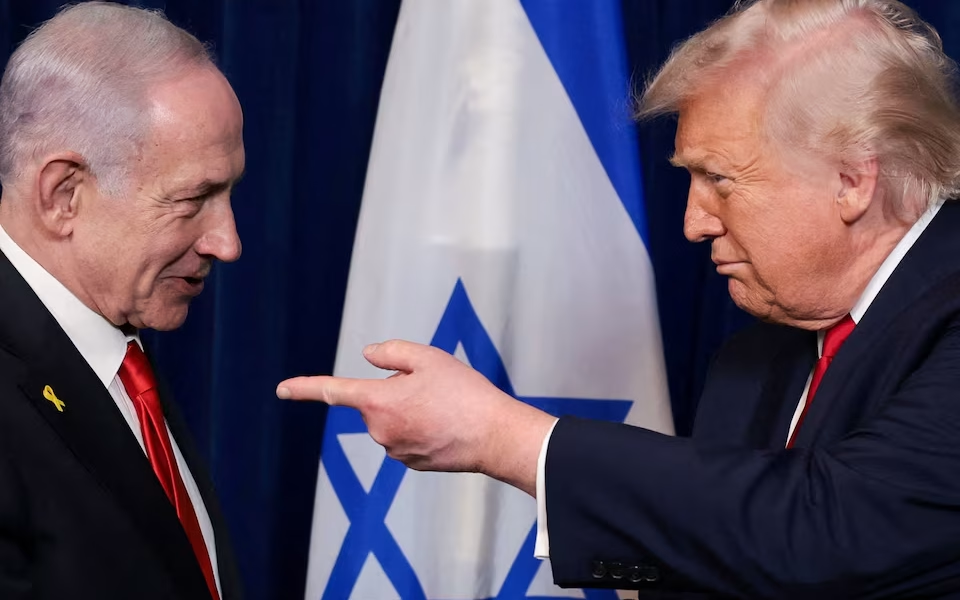
On Tuesday, Israeli Prime Minister Benjamin Netanyahu will walk into the White House for his first face-to-face meeting with United States President Donald Trump since the outbreak of the Iran war—a conflict that has dramatically altered the geopolitical landscape and reignited fears of a wider regional confrontation.
While both leaders have publicly dismissed reports of growing tensions between them, the meeting comes at a delicate moment. Behind the diplomatic smiles lies mounting pressure over Iran, Gaza, Lebanon, regional security and the future of America’s role in the Middle East.
For Netanyahu, the visit is about more than diplomacy—it is about proving that Israel’s most important alliance remains intact at a time when questions are increasingly being asked both abroad and at home.
A Meeting Overshadowed By War
Tuesday’s talks will mark the eighth meeting between Trump and Netanyahu since the US President returned to office.
But arguably none has carried as much political and strategic significance.
The meeting follows months of escalating conflict after American and Israeli strikes on Iran triggered a wider regional crisis earlier this year.
Although Washington has recently shifted toward diplomacy, insisting negotiations deserve another opportunity, military tensions remain dangerously high following the collapse of the April ceasefire.
Unlike previous rounds of fighting, Israel has remained largely on the sidelines during the latest phase of direct US-Iran hostilities, a development that has fuelled speculation about differences between Washington and Jerusalem over the next steps.
Trump And Netanyahu: Partners Or Rivals?
For years, Donald Trump and Benjamin Netanyahu projected one of the strongest political partnerships in modern international diplomacy.
Together, they reshaped Middle East politics through policies that included recognition of Jerusalem as Israel’s capital and the historic Abraham Accords.
But recent months have exposed visible cracks.
Relations reportedly deteriorated during negotiations surrounding the failed Iran ceasefire in April, with reports suggesting Trump privately expressed frustration over Netanyahu’s approach to the conflict.
The US President would later describe the Israeli leader as “a very difficult guy,” comments that quickly fuelled speculation about an emerging rift between the longtime allies.
Netanyahu has consistently rejected that narrative.
Instead, he has described any differences as merely “tactical disagreements,” insisting both governments remain united on the broader objective of preventing Iran from becoming a greater regional threat.
Tuesday’s meeting is widely expected to test whether those assurances reflect reality.
‘Our Goal Is To Safeguard Our Security’
Before departing Israel for Washington on Monday, Netanyahu sought to frame the visit as both a diplomatic mission and a responsibility to protect Israel’s national interests.
“This is a great privilege, but it is also a great responsibility.
“We will discuss all the issues on the agenda, first and foremost Iran. Naturally, our goal is to safeguard our security and also to expand the circle of peace around us.”
After arriving in Washington, Netanyahu attended a private memorial dinner honouring late US Senator Lindsey Graham and is also expected to participate in Graham’s memorial service before holding talks with Trump.
Iran Will Dominate The Agenda
Although multiple regional issues are expected to feature prominently during the discussions, analysts believe Iran will overshadow every other topic.
Washington has increasingly signalled that diplomacy remains its preferred option despite weeks of military confrontation.
Trump’s administration has repeatedly stated its desire to create space for negotiations rather than deepen military involvement.
Israel, however, continues to view Iran’s military capabilities as an existential threat and remains sceptical about whether diplomacy alone can produce lasting security guarantees.
The challenge for both leaders will be finding common ground between military deterrence and diplomatic engagement.
Gaza’s Humanitarian Crisis Cannot Be Ignored
The humanitarian catastrophe unfolding in Gaza is also expected to feature prominently during Tuesday’s discussions.
Nearly three years after the Israel-Hamas war erupted following the October 7, 2023 attacks, reconstruction efforts remain largely stalled.
Military operations continue across parts of Gaza as Israel pursues what it says are militants responsible for attacks against its citizens.
Meanwhile, humanitarian organisations continue to warn about worsening conditions for civilians trapped inside the territory.
The inability to revive reconstruction plans has further complicated regional diplomacy and remains one of the biggest obstacles to achieving lasting stability.
Lebanon, Syria And The Future Of Regional Security
Another major issue expected on the table is the implementation of the US-backed framework agreement signed between Israel and Lebanon last month.
Although hailed as an important diplomatic breakthrough, implementation has proved far more difficult than anticipated.
Reports indicate that unresolved security concerns continue to complicate efforts to translate the agreement into meaningful progress on the ground.
Observers also believe discussions could extend to Israel’s military posture across Lebanon, Syria and Gaza as Washington weighs its broader regional strategy.
Keeping The Abraham Accords Alive
Beyond immediate security concerns, Trump is also expected to push for further expansion of the Abraham Accords—one of the signature foreign policy achievements of his first administration.
The agreements normalised diplomatic relations between Israel and several Arab nations, including the United Arab Emirates, Bahrain and Morocco.
American officials reportedly hope additional countries could eventually join the framework if regional tensions begin to ease.
Experts Say The Visit Is Also About Optics
International relations expert Yonatan Freeman believes the meeting serves another important purpose beyond policy discussions.
You May Like: Biden Audio Tapes Released As Classified Documents Row Returns
According to him, the visit is designed to send a clear message that reports of a breakdown in US-Israel relations have been exaggerated.
“The main issue is to show the world, to show Iran, and also Lebanon and others, that there is no break or any kind of major disagreement between the United States and Israel,” Freeman said.
He argued that while disagreements may exist, they are largely centred on tactics rather than strategic objectives.
“The differences are more about timing, methods and military intensity than about the final goals,” he noted.
Politics At Home Loom Large
For Netanyahu, the Washington visit also carries enormous domestic political significance.
Israel is heading toward another national election, and recent opinion polls suggest the veteran prime minister faces one of his toughest political battles in years.
His government continues to face criticism over its handling of the October 7 Hamas attack that triggered the war in Gaza.
Appearing alongside Trump offers Netanyahu an opportunity to reinforce his image as a statesman capable of maintaining Israel’s most critical international alliance while navigating one of the country’s most dangerous security crises.
Whether Tuesday’s meeting produces major policy breakthroughs remains uncertain.
What is clear, however, is that every handshake, every photograph and every carefully chosen word emerging from the White House will be scrutinised far beyond Washington.
Because in today’s Middle East, diplomacy is no longer just about what leaders say—it is about what the world believes their relationship means for the next chapter of a conflict that continues to reshape global politics.